Green & indigenous News

144 readers
71 users here now

A community for Green & indigenous news!

founded 2 months ago
MODERATORS
1


Pauly Denetclaw
ICT

Last week, the only Native American in the U.S. Senate, Markwayne Mullin, was nominated by President Donald J. Trump to join his cabinet as Secretary for the Department of Homeland Security.

Here are four things to know about him.

Background

Markwayne Mullin grew up on a ranch in Westville, Oklahoma — just under 30 miles east from Tahlequah, the capital of the Cherokee Nation. Mullin is a citizen of the Cherokee Nation, and grew up on what the McGirt decision would later recognize as sovereign lands.

“He grew up on his family’s allotment land,” Micheal Stopp, Mullin’s former chief of staff and political pundit, said. “He understands the Indian issues from his life, from his work, and from his time as a policymaker and elected official. I think for Indian Country this is a bright spot.”

Westville is a rural, small town located on the border of Oklahoma and Arkansas. Adair County has a high population of American Indian and Alaska Natives with nearly 40 percent identifying as such, according to the U.S. Census. Westville has a population of 1,362, according to the Census. His parents are Jim and Brenda Mullin. He links his Cherokee heritage through his maternal grandfather. Mullin is the youngest of seven children.

“I’m Cherokee, and I never knew I was special for being Cherokee until I came to D.C., because where I’m from, everybody’s Indian or wants to be,” Mullin said in a 2025 press release. “And when I came up here, Tom Cole was the first one that came up to me and said, ‘Congratulations, we just doubled the size of our Native American Caucus.’ That was back in 2013. I was like, ‘What do you mean?’ He’s like, ‘Well, I’m Chickasaw and you’re Cherokee.’”

WASHINGTON, DC – JANUARY 29:: Christie Mullin and Sen. Markwayne Mullin at Amazon MGM’s “Melania” World Premiere at The Trump Kennedy Center on January 29, 2026 in Washington, DC Credit: Thompson / AdMedia / MediaPunch /IPX

Like other American Indian and Alaska Natives who are citizens of federally-recognized tribes, Mullin used Indian Health Services for health care, according to Stopp.

He graduated from Stilwell High School. Then, attended Missouri Valley College on a wrestling scholarship. He left at 20, when his father became ill and needed his help running the family business, Mullin Plumbing.

He grew that business and started several others. Mullin is one of the few small business owners in Congress.

Mostly notably, Mullin was an MMA fighter with a professional undefeated record of 5-0.

Mullin married his high school sweetheart, Christie Renee Rowan. They have six children together.

Tribal sovereignty

Many members of Congress don’t understand the nation-to-nation relationship that tribal governments have with the United States, making Mullin’s role in Congress significant. He understands tribal sovereignty, trust and treaty obligations.

Mullin meets regularly with tribal leaders from his state.

“He takes meetings all the time with tribal leaders trying to understand where they’re coming from, while they may not always agree on the policy stance, he does look out for American Indians and for tribal sovereignty,” Stopp said.

In February, he met with Osage Nation Principal Chief Geoffrey Standing Bear who had only positive reflections from their meeting.

“My relationship with Senator Markwayne Mullin has grown over the years, and he has consistently proven to be a strong advocate for tribal sovereignty,” Standing Bear said in a press release. “Senator Mullin understands the unique co-governing relationship Tribal Nations share with state and federal governments, and he is a strong voice for collaboration that benefits everyone who resides within our territory. From critical water infrastructure to oil and gas matters, these are significant issues impacting our Nation and our neighbors alike. Senator Mullin recognizes that we are stronger when we work together, and his visit today reflects his hands-on commitment to serving all Oklahomans. We deeply appreciate his time, attention, and support, and we look forward to further strengthening our relationship.”

Sen. Markwayne Mullin, R-Okla., left, talks with Secretary of Health and Human Services Robert F. Kennedy Jr., right, before President Donald Trump addresses a joint session of Congress at the Capitol in Washington, Tuesday, March 4, 2025. (Win McNamee/Pool Photo via AP)

Mullin has also supported legislation for advanced appropriations for IHS, Bureau of Indian Affairs and Bureau of Indian Education.

“If the federal government lapses in annual appropriation funding, Indian Country should not have to suffer the consequences,” Mullin said in a 2023 press release. “In order to uphold our trust and treaty responsibilities to tribal nations, it is vital the federal government moves these programs to the advance appropriations process to ensure economic security for tribal communities. I’m proud to join my colleagues on this important legislation to protect Indian Country from future shutdowns.”

Two of his children were adopted and Mullin was able to use the Indian Child Welfare Act to bring them into his family.

Mullin has also supported tribal self-governance especially in the meat processing sector.

“Food sovereignty for our Tribal nations and businesses throughout Indian Country is critically important. The limitations of federal resources should not impact their growth,” Mullin said in recent press release. “Oklahoma is home to four of the twelve tribal meat processing facilities in the United States. Given their operation in rural areas, these facilities are often booked for months, or even years in advance, leaving few processing options for tribal producers. Common sense updates to current procedure will help tribes expand production, capacity, and support a reliable food supply in their communities.”

Immigration and border security

In his last congressional election for the US Senate, Mullin has talked about the need for stronger border security and enforcement of immigration laws. It has been one of his main platforms and he’s been outspoken on the issue.

Oklahoma is hundreds of miles from the US-Mexico border, with the entire state of Texas between the two.

As a business owner, Mullin understands the important role that people who immigrate to the United States fill in the workforce.

Sen. Markwayne Mullin, R-Okla., left, talks with Secretary of Homeland Security Kristi Noem, right, before President Donald Trump addresses a joint session of Congress at the Capitol in Washington, Tuesday, March 4, 2025. (Win McNamee/Pool Photo via AP)

“As an employer, one of the largest employers in the state, (he) understands the need for visas and understands the needs that we need to have the right people in this country,” Stopp said. “He has worked with a number of folks to help them get visas to work here when he was a business leader. He also understands the importance of border security.”

He supports the finishing of Trump’s border wall and the mass enforcement of immigration laws.

Controversial figure

A resurfaced clip, from a 2018 interview on Fox & Friends, appears to show Mullin referring to the Trail of Tears as a “volunteer walk.”

Later, Mullin clarified his statement, saying his Cherokee ancestors voluntarily relocated from their traditional homelands in the southeast for what is now Oklahoma.

“I know the story of my family and the history of the Trail of Tears,” Mullen said in a 2018 Facebook post. “The Cherokee Nation states that there were Cherokees who voluntarily relocated before the forced removal.  My family did exactly that — and that is what I was referring to in my comments.  They moved west before the forced removal and settled near the Arkansas/Oklahoma border where my family and I still live today. I never said the Trail of Tears was voluntary.”

What does Mullin’s nomination mean for Oklahoma politics?

His fiery exchanges in the Senate included a 2023 hearing with the head of the International Brotherhood of Teamsters, when Mullin told the union leader to “stand your butt up,” before standing from his seat and appearing to take his ring off.

“If you want to run your mouth, we can be two consenting adults,” Mullin told Sean O’Brien, the union’s president, with whom Mullin had previously engaged in a back-and-forth on social media. “We can finish it here.”

Months after his confrontation with O’Brien, the two reconciled. Mullin called the union leader a “new friend.” O’Brien recently praised Mullin’s secretary nomination.

The interaction underscored how Mullin is one of Trump’s most aggressive defenders in Congress and often spars with people on social media, but also often is an affable presence in the Capitol. He’s known to walk the halls in a cowboy hat and boots, sometimes bouncing a rubber ball as he chats with reporters.

He’s also a conduit between the White House and Senate Republican leadership and maintains relationships from his days in the House. He still leads workout sessions sometimes in the House gym.

At the State of the Union last month, Mullin took a swipe at a sign held by Rep. Al Green that said, “Black people aren’t apes,” a reference to a racist video the president posted that depicted former President Barack Obama and First Lady Michelle Obama as primates in a jungle.

Mullin nominated for Homeland Security secretary

During the US withdrawal from Afghanistan in 2021, Mullin made headlines when he attempted to enter the country from multiple locations and was denied. Mullin said he was trying to help an American family flee Afghanistan.

Mullin initially vowed to only serve three terms in Congress, a promise he later broke when he announced plans to run again, saying then that he “didn’t understand politics” when he originally made the initial pledge.

He also has faced criticism for receiving at least $1.8 million from a federal rescue program designed to keep small businesses afloat during the coronavirus pandemic.

Data from the U.S. Treasury Department showed four separate businesses owned by Mullin received a total of between $800,000 and $1.9 million from the Paycheck Protection Program. A Mullin spokeswoman said at the time the congressman was not involved in the day-to-day operations of the companies and referred questions to the companies’ chief financial officer.

Looking forward

Stopp said Mullin would bring a levelheadedness to the Department of Homeland Security that wasn’t present before.

Mullin still has to be confirmed by the U.S. Senate. The date is unknown.

The Associated Press contributed to this reporting.


The post 4 things to know about Markwayne Mullin appeared first on ICT.


From ICT via This RSS Feed.

2


For millions of commuters, the workday doesn't just begin with a train ride. It also begins with a blast of heat. In one of the largest studies ever conducted on thermal comfort in metro systems, Northwestern University scientists found that subway riders consistently report feeling uncomfortably hot while underground.


From Earth News - Earth Science News, Earth Science, Climate Change via This RSS Feed.

3


The 1995 Mekong Agreement was meant to be a cornerstone of cooperation for Cambodia, Laos, Thailand and Vietnam — promising equitable use, no significant harm, and joint management of the river. The Mekong River Commission was its steward, tasked with data sharing, project consultations, and protecting the basin’s health. Three decades on, the MRC’s 30-year milestone in November 2025 painted a picture of “shared prosperity.” Officials highlighted flood warnings, environmental studies, and even China’s data-sharing nods. Despite the MRC’s claim that “working together is the only way forward” with “new solutions” to keep the Mekong a “river of life, not conflict,” this optimistic rhetoric has echoed for 30 years. In reality, the river faces “a death by a thousand cuts” — cumulative degradation from dams, sediment loss, sand mining, altered flows, and Lake Tonle Sap’s natural regulating role severely undermined — all of which the MRC’s 30-year approach has failed to stop. The 1995 Mekong Agreement and the disasters of dam-building spree Before 1995, the lower Mekong mainstream had zero large dams. The 1995 Agreement altered that. Laos built Xayaburi, operational since 2019, and Don Sahong, running since 2020. Those two alone sparked outrage from Cambodia and Vietnam over blocked fish routes and lost sediment. The PNPCA process, for prior notification and consultation, was supposed to lead to agreement. Instead, Laos treated objections as background noise and pushed ahead. Vietnam’s own tributary dams number 81; Laos, 75. Together, the basin’s total planned hydropower capacity is 23 gigawatts, drawing $50 billion…This article was originally published on Mongabay


From Conservation news via This RSS Feed.

4


The midterm election season is under way, and over the past few weeks, Democrats held two events in Washington, D.C.—a roundtable and a subsequent press conference—signaling a major strategy focused on food prices as well as corporate consolidation.

Food prices were a key issue in the 2024 presidential election, with Donald Trump blaming then-President Joe Biden for record inflation and former Vice President Kamala Harris calling out corporate price gouging.

At the Capitol Hill roundtable on Feb. 26, hosted by Senate Minority Leader Chuck Schumer (D-New York), farmers, union leaders, lawyers, academics, and hunger advocates railed against policies they say have allowed corporations to get too big. They say the policies hurt consumers by making them pay more at the register, and also hurt farmers, who earn less for what they produce.

“We no longer have truly free markets. In the food supply chain, either a single monopolist or a tight oligopoly controls each of the major industries involved,” said Basel Musharbash, a managing attorney for the Antimonopoly Counsel, at the roundtable. “It’s become a systemic feature of our food system, and these self-appointed autocrats of trade are the primary drivers of today’s unaffordable food prices.”

While prices of some individual items have dropped, food prices across the board went up about 3 percent in 2025. Senate Democrats have zeroed in on that fact.

Democrats scheduled those events in response to Republican efforts to position themselves as making progress on lowering costs. In multiple speeches over the past month, President Trump and Secretary of Agriculture Brooke Rollins have said that food prices have come down in the past year. During the State of the Union, Trump said the price of eggs had dropped 60 percent.

“Under Trump’s leadership, inflation has slowed, meaning prices are coming down,” Rollins wrote in a January op-ed. “Key nutritional food items—from fresh chicken to potatoes, citrus to eggs—are down, in some cases up to 25 percent.”

But while prices of some individual items have dropped, food prices across the board went up about 3 percent in 2025. Senate Democrats zeroed in on that fact at the roundtable.

“He’s simply lying to the American people when it comes to food costs,” Schumer said. “He calls the whole thing—affordability—a hoax. What an insult to a family that can’t afford to adequately feed their children.”

Corporate Consolidation

While some lawmakers and witnesses at the table decried Republican cuts to food aid, the central issue was corporate consolidation. Corporate control of farming and supply chains is not only driving up prices, they argued, it is also pushing farmers out of business. A central message to voters will be that Trump’s industry-friendly policies are making the situation worse.

Food prices, in reality, are influenced by a complex set of factors.

Under President Joe Biden, prices rose dramatically in 2022, a spike most experts attributed to pandemic disruptions and other supply chain issues, some of it driven by drought and bird flu. Inflation slowed in 2023 and cooled considerably in 2024. It has continued at a similar rate in 2025 under Trump.

Concentrated markets can lead to higher prices by reducing competition. They can also enable price fixing and price gouging by major companies, which can use an emergency or inflation to raise prices even higher. Advocates have noted, for example, that during the worst periods of price spikes attributed to bird flu, egg giant Cal-Maine lodged record profits. After the disruptions waned, prices remained elevated.

At the roundtable, Democrats argued they are trying to address these systemic drivers, including in bills introduced by lawmakers including Schumer, Senator Ben Ray Luján (D-New Mexico) and Senator Cory Booker (D-New Jersey).

Democrats argued they are trying to address these systemic drivers of higher prices, including in bills introduced by lawmakers.

Farm Action Fund President Joe Maxwell, who farms in Missouri, called on Congress to implement reforms to the agricultural checkoff system, which mandates individual farmers pay into marketing funds that are often allocated to organizations that instead lobby for corporate interests.

Booker has proposed legislation during previous farm bill cycles that would introduce guardrails to ensure checkoff funds are used to benefit farmers instead of corporations.

Maxwell also said during his testimony that lawmakers should do more to protect farmers and ranchers from exploitation at the hands of meatpackers. That could mean eliminating a contentious policy that forces them to prove “harm to competition” in order to sue meatpackers under the Packers and Stockyards Act. Biden’s U.S. Department of Agriculture (USDA) finalized a rule that would accomplish that, but meat industry groups are challenging it and Trump’s last USDA threw out similar rules. If Congress were to write it into law, it would be harder for future administrations or court cases to undo.

Competition, Technology, Privacy

During his testimony, Kansas rancher and meat processor Mike Callicrate called for better anti-trust enforcement, focusing on industries where concentration is harming competition, and for the federal government to do more to buy food directly from smaller producers and processors.

Biden ramped up anti-trust enforcement, including in agriculture, during his presidency, but Trump’s Federal Trade Commission (FTC) has largely dialed it back. After rescinding Biden’s executive order on curbing consolidation in the food system and ending a state program that targeted monopolies, Trump ordered the Department of Justice to investigate whether anti-competitive practices used by food and agriculture companies are driving up costs. It is unclear what will come of that order; a similar order he issued in 2020 failed to produce results.

Other witnesses at the roundtable called attention to new technologies that allow grocers to change shelf prices in real time, sometimes based on customer data. Rachel Lyons, legislative director for the United Food and Commercial Workers (UFCW), a union that represents grocery and meatpacking workers, said that big players in food retail, including Kroger and Walmart, are already rolling out the systems. Because those giants capture a massive proportion of grocery sales, that could cause prices to rise significantly, she said.

Lyons advocated for the passage of a recent bill introduced by Luján that would make the practice illegal.

Trump’s Trade Deals

As the midterms get closer, Republicans are just as focused on convincing voters they will bring food prices down, but their plans to do so look very different.

WASHINGTON, DC - FEBRUARY 24: U.S. President Donald Trump delivers the State of the Union address during a joint session of Congress in the House Chamber at the Capitol on February 24, 2026 in Washington, DC. Behind him are Vice President JD Vance and House Speaker Mike Johnson (R-LA). Trump delivered his address days after the Supreme Court struck down the administration's tariff strategy, and amid a U.S. military buildup in the Persian Gulf threatening Iran. He discussed food prices, among other food and farming issues. (Photo by Kenny Holston-Pool/Getty Images)

President Donald Trump delivers the State of the Union address during a joint session of Congress in February. Behind him are Vice President JD Vance and House Speaker Mike Johnson (R-Louisiana). (Photo credit: Kenny Holston-Pool/Getty Images)

Trump’s main focus has been on importing foods that are facing supply constraints, including eggs and beef. For example, in early February, he signed an executive order to quadruple imports of beef from Argentina, titled “Ensuring Affordable Beef for the American Consumer.”

In an op-ed last week, Rollins argued that the administration will boost farmer income through a series of trade deals and promoting the export of American farm products around the world. In 2025, she said, the administration signed eight trade agreements, with more to come in 2026. New deals with Malaysia and Cambodia, for example, include opening markets for American beef, pork, poultry, and rice.

Commodity dairy, meat, and grain groups like the National Milk Producers Federation and the National Cattlemen’s Beef Association have praised some of those deals.

But farmers and ranchers like Maxwell and Callicrate see those groups as representing corporate interests over individual farmers. Too many of Trump’s policies lean in that direction, they said, but tackling consolidation will get at the root of the problem.

“We are calling on Congress to act,” to strengthen anti-trust laws and take up cases that actually break up companies that have gained monopoly power, Maxwell said. “Let’s put competition back in the market. Let’s get farmers fair prices and consumers fair prices.”

One week later, at a press event hosted by the American Economic Liberties Project, Schumer announced a bill to do that.

Introduced on March 5, the Family Grocery and Farmer Relief Act is co-sponsored by 12 Senate Democrats, including Booker, Peter Welch (D-Vermont), and Ruben Gallego (D-Arizona).

Schumer called it a “pro-consumer, pro-competition, pro-worker and pro-farmer bill.” The unprecedented bill would break up the largest meatpacking corporations by requiring them to choose a single line of business rather than producing pork, beef, and poultry. It would focus especially on the beef industry by enacting hard caps on concentration at the regional and national levels and requiring the FTC to order divestitures when companies reach those caps.

Having worked on the issue for years, Booker said at the event, he was encouraged to see more colleagues, and Democratic leadership, taking up the issue. “I do see the Democratic party trying to do what I believe the Democratic party needs to do, which is reinvent itself and show Americans again that we’re fighting for them,” he said.

In less than a year, it’ll be clear whether that message on food costs—or Trump’s—resonates with voters.

Rebekah Alvey contributed additional reporting.

The post Democrats Tie High Food Prices to Corporate Consolidation appeared first on Civil Eats.


From Civil Eats via This RSS Feed.

5


This coverage is made possible through a partnership between Grist and WABE, Atlanta’s NPR station.

Since 2008, the National Oceanic and Atmospheric Administration, or NOAA, has imposed speed restrictions on ships 65 feet and longer when they pass through areas that North Atlantic right whales frequent in order to protect them from vessel strikes.

The leading causes of death for right whales, an endangered species, are getting hit by boats and getting tangled in fishing gear, though climate change is also a critical factor in their decline. Warming ocean temperatures are making it harder for the whales to find food, causing them to have fewer calves, and driving them into areas with fewer protections against entanglements and ship strikes. Because there are so few whales left, every calf born or whale killed is critical to the species’ survival. In 2008, the population was estimated at 313 and growing, reaching a high of 483 in 2011.

Since the speed limit was implemented, more than 270 whales have been born, though many calves have not survived, and for the last decade the whales have struggled to reach the annual calving rate necessary to sustain the species. In 2017, when right whales began venturing into Canada’s Gulf of St. Lawrence, where no protections were in place, the whales entered what’s known as an “unusual mortality event,” in which 43 died and another 127 were injured or spotted in poor health. Canada has since instituted vessel restrictions, but whales have continued to die in both U.S. and Canadian waters. That spate of injuries and deaths helped drive a push to expand the speed rules in the U.S., but NOAA withdrew its proposal in the final weeks of the Biden administration.

Now, the Trump administration is considering rolling back the speed restrictions even further.

NOAA is seeking input on what it calls “deregulatory-focused modernization” of the rule. In other words, the agency says its goal is to replace the existing speed restrictions with “alternative management areas and advanced, technology-based, strike-avoidance measures.” The announcement highlights technologies, including passive acoustic monitoring and infrared imaging, to track where the whales are.

Read Next

Flags beside the seal of the International Seabed Authority

Indigenous rights, the environment, and international law: What’s at stake at this week’s seabed mining talks

Anita Hofschneider

“NOAA encourages economic prosperity in our oceans, and advancements in technology are increasingly allowing maritime commerce to coexist with endangered species,” NOAA administrator Neil Jacobs said in a statement.

Shipping groups and harbor pilots have criticized the existing speed limits, which they say make it harder for ships to safely navigate changing ocean conditions. The American Pilots’ Association applauded the administration’s move to “reduce unnecessary regulatory and economic burdens” while still protecting right whales.

But researchers and environmental groups contend that the existing rules are working and that the new technology isn’t proven.

“It’s a bit of a fool’s errand, putting your eggs in a basket of technology that hasn’t been developed yet and that we don’t know ever will work,” said Rachel Rilee, the oceans policy specialist with the Center for Biological Diversity.

Boston’s New England Aquarium, which coordinates much of the research and monitoring of right whales, echoed those concerns in a statement, saying these technologies “may become a valuable tool for reducing vessel strikes” but need to be further developed and evaluated.

NOAA is accepting information and comments on the new proposal until June 2.

This story was originally published by Grist with the headline Ocean speed limits protect endangered right whales. Trump wants to weaken them. on Mar 10, 2026.


From Grist via This RSS Feed.

6


Across tribal nations, hosting a convening with dinner and a tour of an ambitious new project is a familiar scene. But for David Harper, a member of the Colorado River Indian Tribes and CEO of the newly created tribal energy financing organization Huurav, a recent gathering felt different. Last week, at the Bluewater Resort and Casino on the Colorado River Indian Tribes reservation in western Arizona, Huurav met with tribal leaders, investors, and farmers to kick off the tribe’s first agrivoltaics project: a practice that allows for growing crops beneath solar panels.

The project marks a significant breakthrough for the tribe and the broader tribal clean energy landscape, arriving on the heels of a devastating blow to federal support. In October of last year, the passage of President Donald Trump’s tax bill, colloquially known as the “One Big Beautiful Bill Act,” stripped roughly $1.5 billion in federal funding earmarked for tribal renewable energy and climate resilience projects.

“Were we surprised by the claw back? No, they’ve done it before,” said Huurav’s Harper. “Have they reneged on their promise of our treaties? Yes, of course. So does that immobilize us and not be able to survive? No, what it does is it helps us, it makes us create a better pathway for ourselves.”

With nearly 1,600 projects by tribal governments and Native entities losing some or all of their federal funding, tribes have been forced to get creative. To keep clean energy projects alive, tribes are turning to philanthropy, low-interest loans, and nonprofits to bridge the massive financial gap.

The Biden-era Inflation Reduction Act of 2022 represented a historic investment in tribes and renewables, but experts and tribal leaders felt it was still insufficient to address historic inequities in Indian Country. “Given the role that the federal government itself played in generating these investment needs through things like land theft, disinvestment, [and] cultural destruction in Indian Country, a one-time infusion of cash isn’t enough,” said Robert Maxim, a member of the Mashpee Wampanoag Tribe and Brookings fellow who recently co-authored a report on the One Big Beautiful Bill Act’s impact. Maxim emphasized that federal funding for Indian Country is a fundamental part of trust and treaty obligations.

“Things like a clean environment, adequate energy to supply homes, basic investments in electricity, and the ability to do all that without higher levels of pollution and environmental degradation than the U.S population as a whole are all key to that trust and treaty relationship,” said Maxim.

To fill the void, nonprofits like the Alliance for Tribal Clean Energy are stepping in. Through its Indigenous Power and Light Fund, backed by philanthropic partners like the MacArthur Foundation, the Alliance serves as a critical lifeline. Huurav is taking a lead role as well, drawing on its expertise gained through its participation in the inaugural cohort of the Agrivoltaics Growth through Resilience and Innovation program, run by the National Laboratory of the Rockies and the Farmland Trust, a conservation-focused agriculture nonprofit.

While commercial lenders are difficult to find across tribal nations, community financial development institutions, known as CFDIs, are meant to bridge that gap by offering funding to Native-led organizations and tribes seeking to invest in renewables on tribal land.

A recent survey found that more than half of Native-operated CFDIs, financial institutions that provide credit to underserved populations, cite lack of funding as one of their biggest challenges, and that financial barrier compounds existing energy inequalities. A 2023 Department of Energy report revealed that tribal households face an energy burden 28 percent higher than the national average. In the Southwest, for example, the Hopi Tribe and Navajo Nation have the highest rates of unelectrified homes and often rely on coal or propane for heat. Many tribes lack reliable transmission lines, leaving them vulnerable to extreme weather events, like floods and wildfires, fueled by climate change.

Despite these obstacles, Indigenous communities are pushing forward by courting sustainable investors to achieve energy independence and lower utility costs. On the Hawaiian island of Molokai, for instance, Native Hawaiians are leveraging profitable renewable energy projects to reduce exorbitant utility bills while simultaneously advancing their landback initiatives. “They’re making the case that they can get investors to invest in their landback projects,” said Kyle Whyte, Citizen Potawatomi Nation and University of Michigan professor of environmental justice. “One of the ways that they’ll be able to succeed in governing that land is through profitable renewable energy projects that would reduce people’s utility costs.”

However, some tribes have turned away from solar and wind altogether, opting instead to pursue active federal grants aligned with the Trump administration’s agenda to expand domestic energy. This includes tapping into almost $172 million in Department of Energy geothermal funding or seeking transmission upgrades backed by a $1.6 billion federal loan guarantee.

Ultimately, the push for clean energy is about self-determination and resilience. As David Harper of Huurav puts it: “We don’t trust the federal government, but we have to work with them to understand that we have to continue in our process of survival and self-sustainability.”

This story was originally published by Grist with the headline The feds pulled $1.5B from tribal clean energy. Tribes are finding another way. on Mar 10, 2026.


From Grist via This RSS Feed.

7


A deepening crisis in the Middle East could send economic shockwaves across sub-Saharan Africa, raising fuel costs, food prices and inflation across the region, according to a new analysis by energy consultancy Zero Carbon Analytics. Roughly one-fifth of the world’s oil and liquefied natural gas flows through the Strait of Hormuz between Iran, Oman and the UAE. If the ongoing conflict continues, energy prices could spike, driving up costs across African economies, which heavily rely on imported oil and gas. “As a net importer of oil products, sub-Saharan Africa will not be immune from the fallout,” the analysis notes, warning that higher energy prices could increase the cost of imports and put pressure on national currencies and foreign reserves. The report analyzed import data and cash reserves across 29 African countries and found Senegal, Benin, Eritrea, Burkina Faso and Zambia are among the most vulnerable if oil prices remain elevated. These countries combine high dependence on imported fuel with limited foreign currency reserves, meaning they will quickly run out of money to pay for more expensive fuel. “The countries that are most exposed rely entirely on oil imports and already have low levels of international reserves,” Nick Hedley, who authored the analysis, told Mongabay. “This means when oil prices rise, these countries risk further depleting their holdings of U.S. dollars, gold and other reserves. This further weakens their currencies, making imports of all goods more expensive, which pushes up inflation.” The ripple effects could extend beyond fuel. Rising oil and…This article was originally published on Mongabay


From Conservation news via This RSS Feed.

8


They raid compost bins, outsmart latches and sometimes look gleeful doing it. A new study in Animal Behaviour suggests raccoons may not just be opportunistic—they may be genuinely curious.


From Biology News - Evolution, Cell theory, Gene theory, Microbiology, Biotechnology via This RSS Feed.

9


By 2050, nearly 20% of the areas currently suitable for cocoa cultivation in Colombia could lose the climate conditions needed for production, particularly in the lowlands of the Caribbean region and the country's northeastern departments, according to a new scientific study.


From Biology News - Evolution, Cell theory, Gene theory, Microbiology, Biotechnology via This RSS Feed.

10


The World in Focus

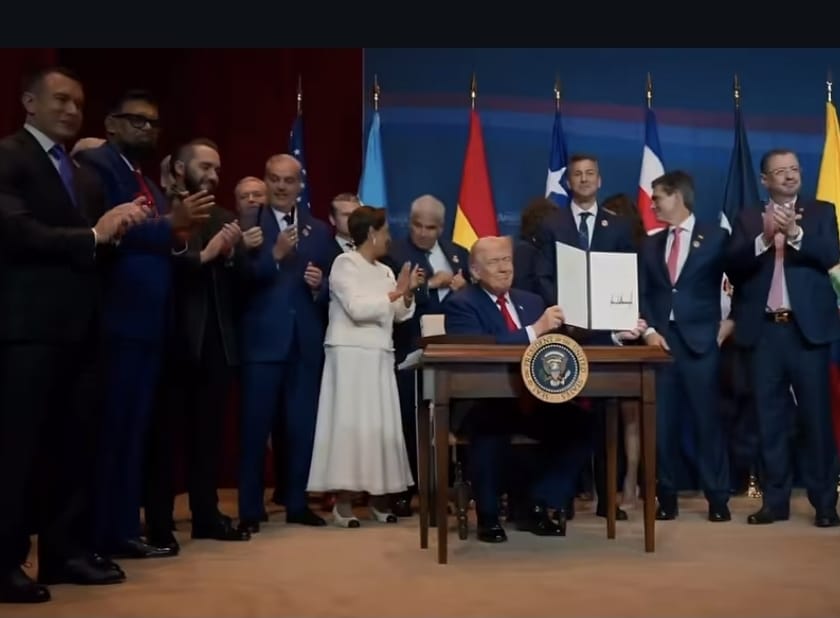
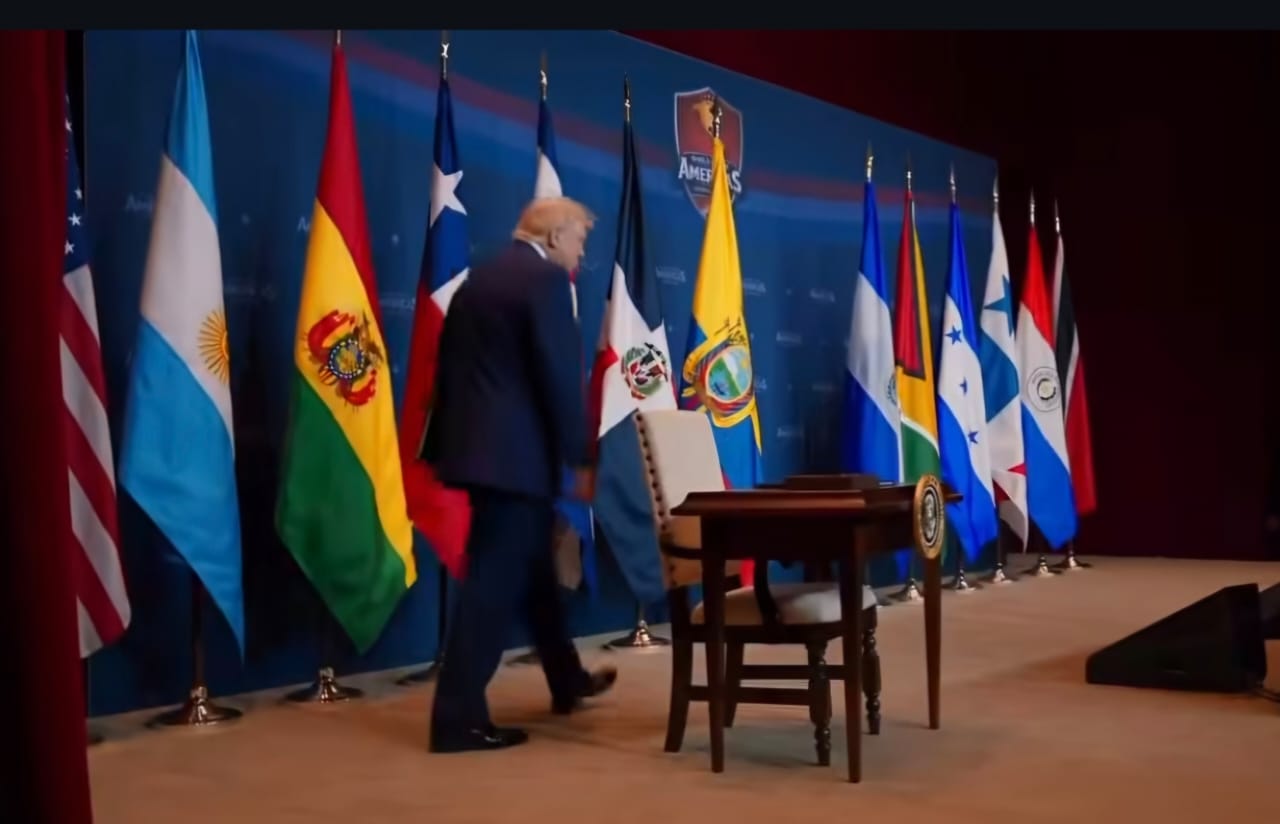
A week after the treacherous joint military attacks by the United States and Israel on Iran in the middle of negotiations, President Trump gathered the heads of state of his backyard at the Trump National Doral Miami hotel and golf course under the slogan “Shield of the Americas.” Presidents ideologically aligned with Trump attended: Argentina, Bolivia, El Salvador, Ecuador, Guyana, Honduras, Paraguay, Costa Rica, Panama, the Dominican Republic, Trinidad and Tobago, and the president-elect of Chile.

The meeting is part of the United States National Security Strategy, which seeks to fundamentally reorganize the hemisphere under a unified command to face competition with China and militarize the fight against drug trafficking. This week in Ecuador provided an example of what that looks like in practice in a joint, but unconstitutional, operation by the Ecuadorian armed forces with the Southern Command. Ecador’s constitution does not allow the participation of military forces from another country or foreign military bases. In November, President Daniel Noboa attempted to amend the constitution via a plebiscite that was rejected by a large marjority, so, following in the footsteps of his mentor, Donald Trump, he chose to trample on the law.

Trump’s speech to the 12 right-wing leaders of the region focused on the fight against organized crime. He noted that “at the heart of our agreement is a commitment to use lethal military force to destroy the sinister cartels and terrorist networks once and for all.” Perhaps because of his upcoming visit to Beijing, scheduled for the end of the month, Trump used terms such as “foreign interference” and “external forces” instead of direct references to China., but in a clear reference to that country, he said, “Under this new doctrine, we will not allow any hostile foreign force to set foot in our hemisphere, including the Panama Canal. Together, we will protect our sovereignty and our security, as well as our precious freedom and independence.”

The summit was convened to coordinate regional actions to limit China’s growing presence in the Western Hemisphere, which is seen as a risk to the security and prosperity of the United States. The same issues were discussed with less fanfare during the meeting of defense ministers, in which 18 countries from the region participated. The task of heading up “Shield of the Americas” was given to Kristi Noem, who was dismissed as Secretary of Homeland Security on Thursday.

The meeting, held Mar. 4 and 5 in SouthCom headquarters in Miami of defense ministers from 18 countries was hosted by Secretary of War Pete Hegseth and White House Deputy Chief of Staff and National Security Advisor Stephen Miller. In his speech, Miller said that the United States “will not cede an inch of territory in the hemisphere” to its “enemies or adversaries,” and admitted that the Trump administration is using “hard power, military power, and lethal force to defend the American homeland.”

in the final statement, authorities labeled drug cartels as terrorist organizations, which allows for the use of lethal force and even unilateral operations in their territories. They also agreed to protect critical infrastructure and join a coalition to combat narco-terrorism and other shared threats facing the Western Hemisphere. The problem is that relying on the armed forces to replace the role traditionally played by civilian law enforcement carries risks in a region where military institutions and oversight are weak and the armed forces often bear the legacy of human rights abuses. Rebecca Bill Chavez, president of the Inter-American Dialogue and former deputy assistant secretary of defense for Western Hemisphere affairs, believes that without strong rule of law institutions and civilian oversight, militarizing the fight against cartels can weaken the very institutions needed to defeat them.

Farewell to the Summits of the Americas

The “Shield of the Americas” summit marks a break with the Summits of the Americas that have been held every three years since 1994, when President Clinton initiated them in Miami, where the proposal to create the Free Trade Area of the Americas (FTAA) was officially launched. At those summits, the U.S.line was less explicit, the directives more veiled, and they usually sought at least some consensus. At the 2015 Summit of the Americas, membership rose to 35 with the admission of Cuba, whose citizens are now subjected to inhumane punishment by President Trump in the form of a cruel oil embargo causing massive power cuts throughout the country. The U.S. campaign against Cuba is multifaceted. On March 4, the Ecuadorian president expelled all diplomatic personnel from the Cuban embassy in Quito. In late February, the newly elected president of Honduras, Nasry Asfura, with strong encouragement from Trump, terminated a medical cooperation agreement with Cuba, prompting the departure of more than 170 Cuban doctors serving low-income communities. Jamaica did the same under pressure from the United States.

The Summits of the Americas, organized by the OAS, sought to be inclusive (despite tensions), while the latest summit is a bloc of supporters of the current U.S. president. The Secretariat of the Summits, the Organization of American States (OAS) has been replaced by the Southern Command, with a more militaristic and less diplomatic agenda. The absence of three important economies in the region reflects the difference between a bloc that seeks a more autonomous foreign policy and one that is unconditionally aligned with the United States. The presidents of Mexico, Brazil, and Colombia stayed home excluded for maintaining critical or divergent positions on the intervention and security policies of the current U.S. administration. Cuba, Nicaragua, and Venezuela have also been excluded. Although Venezuela’s acting president, Delcy Rodríguez, maintains open channels on energy issues, in the area of security they are still considered the “target” to be neutralized.

The meeting of the 12 countries aligned with Trump seeks to consolidate itself as a regional bloc of strategic allies under a new security and geopolitical agenda that focuses on the fight against terrorism; curbing China’s growing economic and political influence in the Western Hemisphere, ensuring access to strategic resources for the United States and its allies; reducing irregular migration flows to the US border; reestablishing US dominance in the region through the so-called “Trump Corollary to the Monroe Doctrine”; and promoting free markets and “fair” trade among participating nations that share the ideological affinity of the current administration.

————————————————————

The Shield of the Americas project has no future. The U.S. is in an economic, social, and moral crisis that, in the short term, will cause the government to suffer defeats in the midterm elections. Only 27% of the public approves of military attacks on Iran. Trump has called for a 50% increase in the Pentagon’s budget as the debt approaches $40 trillion…

———————————————————–

The United States will supposedly reward the countries that signed this agreement and that form part of the Conference of the Americas against Cartels, by providing lethal assistance via military loans with near-zero interest rates so that allies can renew their military equipment, provided they buy from U.S. arms companies. They have also promised tax incentives for U,S, companies that leave China to set up in the countries that have signed the agreement; and a Critical Infrastructure Fund consisting of fresh money to modernize ports and airports to prevent these countries from taking out Chinese loans, which Washington debts “debt traps.”

Shadows of China

The Doral Charter signed on Saturday was a photo op for Trump to have his picture taken with his 12 guests and deliver the speech that defines his strategy. Despite the participants’ commitment to distance themselves from China from the region, they may not be entirely convinced. Governments have not always been able to comply with Washington’s directives to prevent their business elites from making joint investments, as was the case with the port of Chancay in Peru, where a group of Peruvian businessmen sought capital to invest in the deep-water port, identified in 2007 by former sailors who later joined the Peruvian company Volcán. The Chinese state-owned company Cosco Shipping joined jointly launched the project in 2019, making Chancay a hub for South America and the city of Shanghai, via a joint venture in which the Peruvian company has a 40% stake and the Chinese company the rest.

China has established itself as the leading trading partner of most South American countries, and Trump does not have the means to replace it. That is why he is applying tariffs even to countries that have existing free trade agreements (FTAs). In these agreements, approved by Congress, countries commit to reciprocally liberalizing their tariff regimes, with some exceptions provided for in the agreements themselves. Trump uses tariffs as a weapon of mass coercion, ignoring the legal certainty of the FTAs. This violation of the treaties is not being responded to forcefully by governments, despite the damage it causes to exporters. They seem to forget that, in order to achieve predictability in access to that country’s market, they had to give in to painful US demands in areas such as intellectual property (which led to more expensive medicines and agrochemicals), elimination of investment performance requirements, and opening up public procurement, among others. The U.S., government is implementing a diplomacy of tariff extortion and might makes right, causing a setback in international relations.

For Latin American and Caribbean businesses, working with both hegemonic powers, the United States and China, represents a logical and pragmatic element of survival. But for the Trump administration freedom of choice is interpreted as a betrayal of the “Western Hemisphere,” accompanied by the most diverse and outrageous narratives, which most media outlets end up presenting as truth.

The present condemns you

The Shield of the Americas project has no future. The United States is in an economic, social, and moral crisis that, in the short term, will cause the government to suffer a crushing defeat in the midterm elections. Only 27% of the country’s citizens approve of military attacks on Iran. Trump has called for a 50% increase in the Pentagon’s budget at a time when the debt, spiraling uncontrollably, is approaching $40 trillion, with a chronic fiscal deficit of 6% per year, a fall in the value of Treasury bonds, and a loss of the dollar’s hegemony. These factors, particularly debt, are the major limitations of the Donroe Doctrine. Its investment promises often ring hollow in the face of tangible projects such as the laying of a submarine fiber optic cable from Valparaíso to Hong Kong by a Chinese company, which Chile has had to suspend due to pressure from the US government and threats to withdraw the visa waiver program for Chilean citizens; the suspension of the concession of two ports operated by a Hong Kong-based Chinese company at the ends of the Panama Canal, under threat from the United States to reclaim the canal; and the prevention of Chinese companies in Costa Rica from participating in tenders for the installation of 5G technology.

Most of the presidents invited are well aware of the economic situation in the United States. But they validate the official U.S. narrative on narcoterrorism and “the Christian heritage” that unites the hemisphere, as Pete Hegseth stated, because that discourse serves to legitimize the use of their armed forces in their respective countries. Ironically, by not demanding real economic compensation, they are accepting that the link with the United States is purely extractive and military. Washington sets the rules (and sells the weapons) and they provide the territory and obedience.

Trump does not have the resources to finance this plan. His miscalculation in invading Iran, thinking that the population of that country would bow down to the liberating bombs of a foreign army that assassinated its religious and military leaders, will prolong the war with major increases in oil prices, rising inflation, economic contraction, and loss of political capital. In a scenario of war and Trump’s imminent electoral defeat, the Latin American countries that attended Doral will face an economic vacuum that China could ultimately fill more easily.

The World in Focus” is Ariela Ruiz Caro’s biweekly column for Mira: Feminisms and Democracies. Ruiz Caro is an economist with a master’s degree in economic integration processes and has worked as an international consultant on trade, integration, and natural resources with Economic Commission for Latin America and the Caribbean, the Latin American Economic System (SELA), and the Institute for the Integration of Latin America and the Caribbean (INTAL), among others. She has been an official of the Andean Community, an advisor to the Commission of Permanent Representatives of MERCOSUR, and Economic Attaché at the Embassy of Peru in Argentina.


From MIRA via This RSS Feed.

11


Global levels of physical activity have not improved over the past two decades, despite widespread policy development and adoption, and large disparities persist across gender and socioeconomic groups. The findings from three papers published in Nature Medicine and Nature Health indicate that current efforts to promote participation in physical activity are insufficient and that coordinated action is needed to ensure that physical activity contributes to public health and wider societal goals, including climate resilience.


From Earth News - Earth Science News, Earth Science, Climate Change via This RSS Feed.

12


In the older quarters of Singapore, fragments of forest persist like memories that refuse to fade. Within them live creatures that few residents ever see, and some that no longer exist there at all. The disappearance of species on an island is not always dramatic. Often it happens quietly, in decades of thinning habitat and interrupted life cycles, until absence becomes normal. A snake not recorded since 1904 leaves no trace in the soil, only a line in an archive. Selangor mud snake (Raclitia indica), which was rediscovered in Singapore in 2020 after an absence of 106 years. Photo credit: the Law Brothers Singapore’s ecological history is one of compression. Since the 19th century, most primary forest has been cleared for plantations, industry, and housing. Today only a sliver of original forest remains, surrounded by a landscape remade for human needs. Such transformation has exacted a toll on wildlife, especially terrestrial vertebrates. Estimates suggest that roughly a third of species across several groups have disappeared locally over two centuries. Snakes and lizards, however, tell a more complicated story. A recent analysis of Singapore’s squamates, the group that includes snakes and lizards, reconstructs a timeline of loss using historical records and statistical modeling. The pattern resembles two pulses of erosion. The first, in the early 1900s, coincides with the near-total conversion of primary forest. A second, smaller wave arrives late in the 20th century, as remaining secondary forests give way to rapid urbanization. Primary-forest specialists suffered most. Species able to tolerate…This article was originally published on Mongabay


From Conservation news via This RSS Feed.

13


Long before humans cultivated crops or sailed between continents, a group of plant viruses was already evolving among wild plants in Eurasia. According to a new international study published in Plant Disease, the ancestors of modern tymoviruses likely emerged before the last Ice Age, reshaping scientists' understanding of the vast evolutionary history of plant disease.


From Biology News - Evolution, Cell theory, Gene theory, Microbiology, Biotechnology via This RSS Feed.

14


Gabriela Sá Pessoa
Associated Press

SAO PAULO — Pugapia and her daughters Aiga and Babawru lived for years as the only surviving members of the Akuntsu, an Indigenous people decimated by a government-backed push to develop parts of the Amazon rainforest. As they advanced in age without a child to carry on the line, many expected the Akuntsu to vanish when the women died.

That changed in December, when Babawru — the youngest of the three, in her 40s — gave birth to a boy. Akyp’s arrival brought hope not just for the Akuntsu line but also for efforts to protect the equally fragile rainforest.

“This child is not only a symbol of the resistance of the Akuntsu people, but also a source of hope for Indigenous peoples,” said Joenia Wapichana, president of Brazil’s Indigenous protection agency, known as Funai. “He represents how recognition, protection and the management of this land are extremely necessary.”

Protecting Indigenous territories is widely seen as one of the most effective ways to curb deforestation in the Amazon, the world’s largest rainforest and a key regulator of global climate. Researchers warn that continued forest loss could accelerate global warming. A 2022 analysis by MapBiomas, a network of nongovernmental groups tracking land use, found Indigenous territories in Brazil had lost just 1 percent of native vegetation over three decades, compared with 20 percent on private land nationwide.

In Rondonia state, where the Akuntsu dwell, about 40 percent of native forest has been cleared, and what remains untouched is largely within conservation and Indigenous areas. The Akuntsu’s land stands out in satellite images as an island of forest surrounded by cattle pasture as well as soy and corn fields.

In the 1980s, deforestation pushed attacks in Rondonia

Rondonia’s deforestation traces back to a government-backed push to occupy the rainforest during Brazil’s military regime in the 1970s. Around the same time, an infrastructure program financed in part by the World Bank promoted domestic migration to the Amazon, including the paving of a highway across the state.

In the 1980s, Rondonia’s population more than doubled, according to census data. Settlers were promised land titles if they cleared the forest for agriculture and risked losing claims if Indigenous people were present, fueling violent attacks by hired gunmen on Indigenous groups such as the Akuntsu.

Funai made first contact with the Akuntsu in 1995, finding seven survivors. Experts believe they had numbered about 20 a decade earlier, when they were attacked by ranchers seeking to occupy the area. Funai agents found evidence of the assault, and when they contacted the Akuntsu, the survivors recounted what happened. Some still bore gunshot wounds.

The last Akuntsu man died in 2017. Since then, Babawru lived with her mother, Pugapia, and Aiga, her sister. The women, whose ages aren’t known for certain, have chosen to remain isolated from the non-Indigenous world, showing little interest in it.

In 2006, Funai granted territorial protection to the Akuntsu, establishing the Rio Omere Indigenous Land, which they have since shared with the Kanoe people. The two groups, once enemies, began maintaining contact, usually mediated by officials. The relationship is complex, with cooperation but also cultural differences and language barriers.

The Associated Press requested a facilitated interview with the women through Funai, but the agency didn’t respond.

Amanda Villa, an anthropologist with the Observatory of Isolated Peoples, said Akuntsu women depend on Kanoe men for tasks considered masculine, such as hunting and clearing fields. The two groups have also exchanged spiritual knowledge — the current Kanoe spiritual leader, for example, learned from the late Akuntsu patriarch.

But the most consequential development for the future of the Akuntsu may have occurred last year, when Babawru became pregnant by a Kanoe man.

Linguist Carolina Aragon is the only outsider able to communicate with the three women after years studying and documenting their language. She works closely with Funai, translating conversations almost daily through video calls. Aragon also supported Babawru remotely during her labor and was with her during an ultrasound exam that confirmed the pregnancy.

Aragon said Babawru was stunned by the news. “She said, ‘How can I be pregnant?’” Aragon recalled. Babawru had always taken precautions to avoid becoming pregnant.

Social collapse shaped the Akuntsu’s choices

The surviving Akuntsu women had decided they would not become mothers. The decision was driven not only by the absence of other men in their community, but also by the belief that their world was disorganized — conditions they felt were not suitable for raising a child.

“You can trace this decision directly to the violent context they lived through,” said Villa, the anthropologist. “They have this somewhat catastrophic understanding.”

The Akuntsu believed they could not bring new life into a world without Akuntsu men who could not only perform but also teach tasks the group considers male responsibilities, such as hunting and shamanism.

“A breakdown of social relations that followed the genocide shaped their lives and deepened over the years. That does lead people to think — and rethink — the future,” Aragon said. “But the future can surprise everyone. A baby boy was born.”

Aragon said the women were embarking on a “new chapter,” choosing to welcome the child and adapt their traditions with support from the Kanoe and Funai. Villa said the fact that the newborn is a boy creates the possibility of restoring male roles like hunter.

Researchers and officials who have long worked with the three women understood that protecting the territory depended on the Akuntsu’s survival as a people. They sought to avoid a repeat of what happened to Tanaru, an Indigenous man who was discovered after living alone and without contact for decades.

After the discovery, authorities struggled to protect Tanaru’s territory. After he died in 2022, non-Indigenous groups began disputing the land. Late last year, the federal government finally secured the area, turning it into a protected conservation unit.

Funai’s Wapichana said Babawru’s child “is a hope that this next generation will indeed include an Indigenous person, an Akuntsu, ensuring the continuity of this people.”

Through years of careful work, Funai secured territorial protection for the Akuntsu and helped foster ties with the Kanoe. The agency also arranged spiritual support from an allied shaman, allowing the women to feel safe bringing new life into the world after decades of fear and loss.

The Akuntsu form emotional bonds with the forest and with the birds. Now, they are strengthening those bonds with a new human life in their world.

“What kind of relationship will this boy have with his own territory?” Aragon said. “I hope it will be the best possible, because he has everything he needs there.”

The post With only 3 women left, an Amazon tribe faced extinction. An unexpected birth now brings hope appeared first on ICT.


From ICT via This RSS Feed.
15


After a heart attack, the heart struggles to recoup and maintain energy. One-third of patients develop heart failure as a result—a condition that impacts 6.8 million Americans and carries a high lifetime risk, with 1 in 4 adults in the U.S. expected to develop the condition during their lifetime. This makes finding lasting treatment a medical priority.


From Biology News - Evolution, Cell theory, Gene theory, Microbiology, Biotechnology via This RSS Feed.

16


British Columbia sent a letter in late January to Alaska and Washington state Tribes informing them that the Province is proposing to amend the Environmental Assessment Act, excluding U.S. Tribes from government consultations related to environmental projects.


From News Stories via This RSS Feed.

17


Despite its widespread biodiversity, Australia holds an unenviable record when it comes to wildlife: the highest mammalian extinction rate in the world. Since the arrival of Europeans and colonial expansion, at least 40 terrestrial mammal species have been lost, and others are facing serious threats. Notable among these is the northern quoll (Dasyurus hallucatus), a small, carnivorous marsupial that ranges through tropical areas of the continent and is considered endangered on the IUCN Red List due to threats posed by introduced animals gone feral, habitat change, and landscape degradation. The loss of mammalian biodiversity has coincided with widespread threats to the preservation of First Nations cultural knowledge in Australia. Over the past two centuries, Indigenous people have been forcibly removed from their lands and resettled in other parts of the continent. During this time, traditional land management practices and cultural knowledge of local biodiversity have largely not been considered by the scientific establishment. Now, however, a recent study has used Indigenous cultural and ecological knowledge (ICEK) alongside Western scientific methods as way to help conserve northern quolls, and potentially other species, into the future. The study, published in January in the journal Wildlife Research, was led by members of the Martu people, whose traditional lands span portions of the western desert region in Western Australia, the country’s largest state. Northern quolls, known in the Martu language as wiminyji, were only identified by modern science in this part of the country in 2012, despite Martu elders knowing of the species’ presence…This article was originally published on Mongabay


From Conservation news via This RSS Feed.

18


Ecuador has announced the creation of a new biological corridor designed to connect the eastern ranges of the Andes with the Amazon Rainforest, part of a larger initiative to strengthen ecological connectivity and protect biodiversity. The Llanganates–Yasuní Connectivity Corridor, officially announced this month, spans 2,159 square kilometers (834 square miles) across two provinces, connecting Llanganates National Park with Yasuní Biosphere Reserve. It’s one of several projects in the country aiming to preserve ecological connectivity between the Andes and Amazon, a transition zone vital for species adaptation as climate change and human pressure reshape habitats. “By securing ecological connectivity between the Andes and the Amazon, we are helping safeguard biodiversity, strengthen climate resilience, and support local communities whose livelihoods depend on healthy ecosystems,” WCS Ecuador country director Sebastian Valdivieso said in a press release. “This corridor reflects the power of collaboration between national authorities, local governments, civil society and international partners.” Yasuní Biosphere Reserve covers 27,564 km2 (10,643 mi2) of Amazon Rainforest, while Llanganates National Park covers 2,197 km2 (848 mi2) of high-elevation ecosystems in the Andes. The two protected areas appear close on a map but are actually separated by significant elevation differences, with parts of Llanganates reaching around 4,000 meters (13,000 feet) above sea level. Now, the corridor allows “altitudinal connectivity” between the two protected areas, according to WCS Ecuador, one of the organizations overseeing the project. The corridor will help protect species that need to migrate between different elevations, such as the black-and-chestnut eagle (Spizaetus isidori). It could…This article was originally published on Mongabay


From Conservation news via This RSS Feed.

19


In some parts of the deep ocean, it can look like it's snowing. This "marine snow" is the dust and detritus that organisms slough off as they die and decompose. Marine snow can fall several kilometers to the deepest parts of the ocean, where the particles are buried in the seafloor for millennia.


From Earth News - Earth Science News, Earth Science, Climate Change via This RSS Feed.

20


There is growing interest in the scientific community and private sector in biological approaches to marine carbon dioxide removal—strategies designed to enhance the ocean's natural ability to absorb carbon from the atmosphere. However, a study led by Megan Sullivan, a postdoctoral researcher in the University of Rhode Island's Graduate School of Oceanography (GSO), suggests that some proposals may overlook an important factor.


From Earth News - Earth Science News, Earth Science, Climate Change via This RSS Feed.

21


Climate change is threatening modern life in ways we are still finding, from food security to the economy to everyday living. It has been labeled a "threat multiplier" for its potential to complicate geopolitical relationships. Our efforts to adapt as a global society face obstacles brought on by inequality.


From Biology News - Evolution, Cell theory, Gene theory, Microbiology, Biotechnology via This RSS Feed.

22


Researchers are documenting black seaweed across Southeast Alaska. They are looking at whether the important cultural resource should be considered a keystone species.


From News Stories via This RSS Feed.

23


Federal immigration officials detained and deported Sonia Espinoza Arriaga and two of her three sons, ages 5 and 16. As of Thursday, her oldest son remains in custody at an ICE detention center in Washington.


From News Stories via This RSS Feed.

24


In an effort to protect chum bound for Western Alaska rivers, the board has approved some of the most severe restrictions in decades on fishing in the state-managed area lying along the western Alaska Peninsula and Eastern Aleutians.


From News Stories via This RSS Feed.

25


Herring from different parts of the Baltic Sea belong to distinct populations genetically adapted to local differences in salinity and temperature. However, these populations can also mix with each other, according to a new study by researchers from Uppsala University, Stockholm University and the Swedish University of Agricultural Sciences. These results have important implications for the management of the Baltic herring. The study is published in the Proceedings of the National Academy of Sciences.


From Biology News - Evolution, Cell theory, Gene theory, Microbiology, Biotechnology via This RSS Feed.

view more: next ›