this post was submitted on 22 May 2026
107 points (100.0% liked)
Woodworking
8677 readers
47 users here now
A handmade home for woodworkers and admirers of woodworkers. Our community icon is submitted by @inquanto@lemmy.world, winner of the Christmas 2025 gift contest with a lovely series of hardwood cutting boards.
founded 3 years ago
MODERATORS
you are viewing a single comment's thread
view the rest of the comments
view the rest of the comments
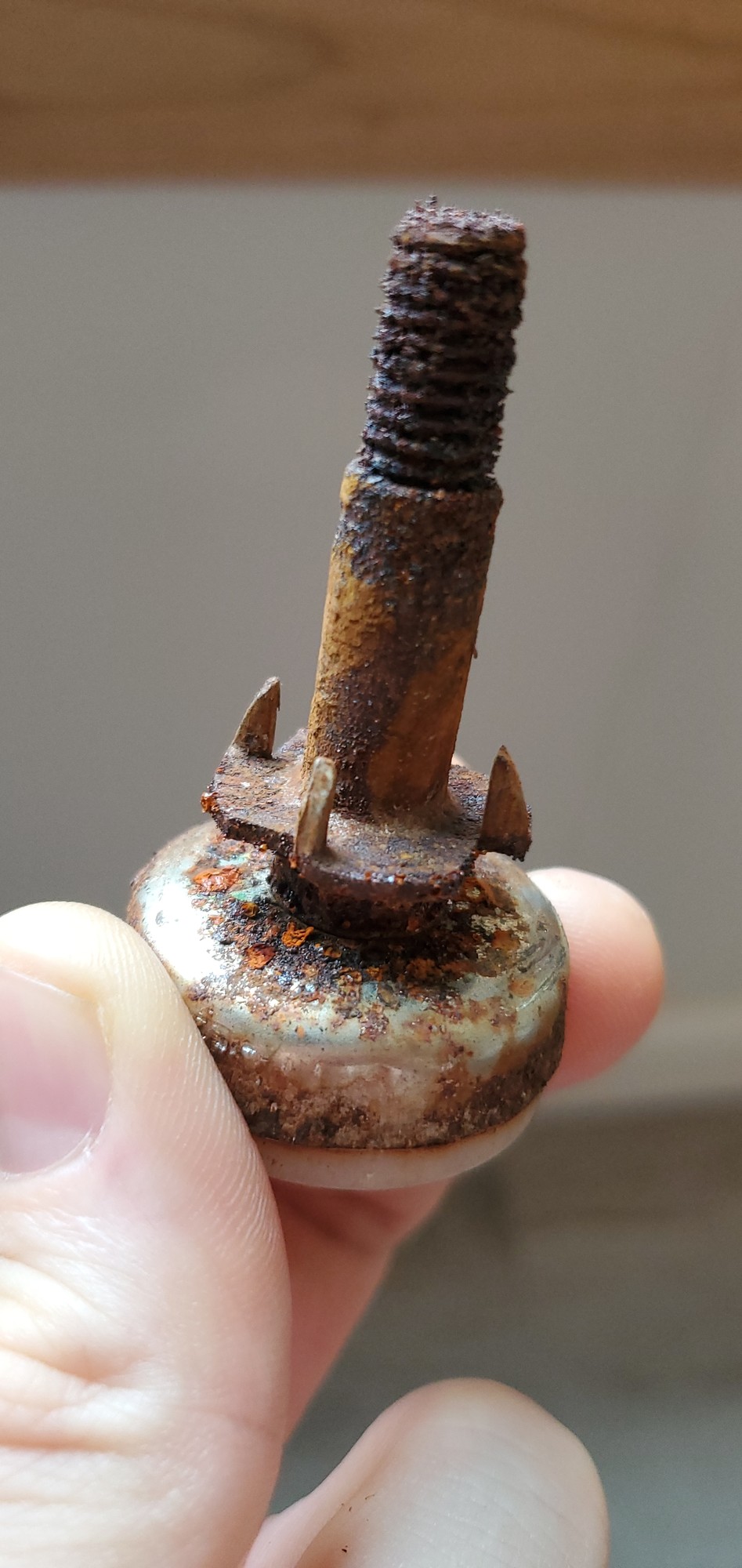
This is what you find at the bottom of a table leg. It provides a foot for the table leg which can be lengthened or shortened a little to stop your table from wobbling.
The sleeve part is called a t-nut and is hammered straight into a pre-drilled hole. Those spikes sink into the wood and keep the t-nut from rotating in that hole. The threaded part then screws into it. If the t-nut was allowed to rotate they’d both just spin together and the foot wouldn’t lengthen/shorten.
A more generalized term for things like this t-nut is “threaded insert.” It’s a way to create a place on a piece of wood where something else can be screwed in. You can’t really tap reliable threads in wood, not at small sizes and not with any kind of load bearing durability. Some crafty people fiddle with wood screws / threads but usually at much larger sizes and it’s kind of a novelty, not really popular, and for good reason.
All together I would call this device a “leveling foot” since they are used to make a table level, or at least adapt a table to an uneven floor so it doesn’t wobble.
If any of you have wobbly kitchen tables, get down there and see if the feet are like this picture. You can get that wobble out with a few turns of the correct foot.